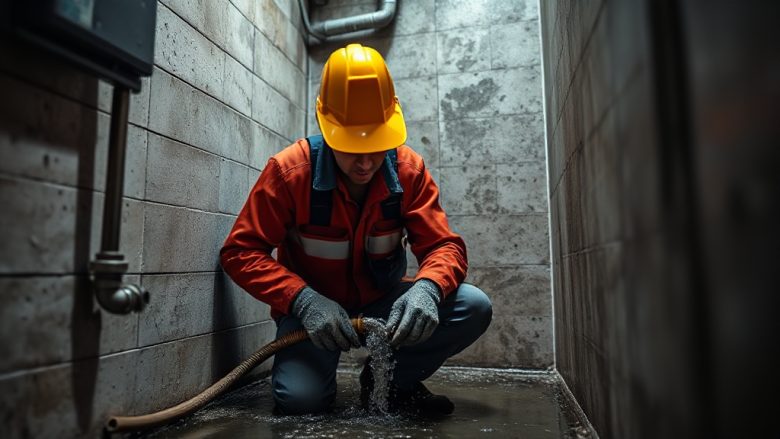
Fixing a Stubborn Blockage in Iguatemi: When the Plunger Fails
You have plunged the toilet for ten minutes, poured two bottles of drain cleaner down the shower, and the water still rises instead of draining. In a neighborhood like Iguatemi, in São Paulo, that is the moment you stop treating the problem as a household annoyance and start treating it as a hydraulic issue. This article is for that exact situation: what to require from a service, how the proper procedure works, and what to inspect afterward when the usual method has already failed.
The first practical step is to recognize that a blockage which survives a plunger and a chemical product is rarely a simple surface clog. It is usually deeper in the pipe, in the stack, or in the connection to the public network. That is why calling a desentupidora em Iguatemi São Paulo SP early is cheaper than letting pressure build up and crack a joint or push wastewater back into the floor drain.
What a Proper Iguatemi Drain Service Must Have Before It Starts
Before anyone opens a cleanout or feeds a cable into your pipes, a credible company should be able to answer a few basic questions. These requirements are not bureaucracy; they are what separates a real unclogging job from a temporary poke that fails again in two weeks.
Clear diagnosis and equipment suited to the pipe
A serious technician asks where the water backs up, how many fixtures are affected, and whether the property has a basement, a grease trap, or an old clay sewer line. The answer determines the tool. A hand auger works on a sink trap; it destroys nothing but also solves nothing in a 100 mm main line. For deeper obstructions, the correct equipment is a rotating cable machine or a high-pressure jetting unit.
Ask what will be used before work begins. A company that only carries a plunger and a bottle of acid is not equipped for a blockage that has already resisted both.
Licensing, insurance and a stated price
In São Paulo, a service provider should be able to present a CNPJ, a clear service description, and a price agreed before the work starts. Emergency calls at night or on weekends often carry a different rate, so confirm that in advance. Never allow work to begin without an agreed price and a stated scope.
Access to the right cleanouts
Many apartments and commercial units in Iguatemi have their cleanouts hidden behind tiles, inside a service shaft, or in a shared corridor. The technician should locate them before drilling, breaking, or removing anything. If the cleanout is inaccessible, the service must include opening it properly — not cutting a random hole in the wall.
The Procedure When Conventional Unclogging Has Already Failed
When a plunger and a chemical product have both failed, the job moves from the fixture to the network. The sequence below is the one a trained team follows, and it is worth knowing because it tells you whether the technician on site is improvising or working to a method.
Step 1: Isolate the affected branch
The technician tests each fixture separately to determine whether the obstruction is local, in a branch line, or in the main sewer. If only the kitchen sink is slow, the problem is likely grease in the branch. If the toilet, shower, and floor drain all back up together, the blockage is in the main line.
Step 2: Inspect before forcing
A camera inspection is the difference between guessing and knowing. It reveals roots, collapsed pipe sections, accumulated grease, or foreign objects. Forcing a cable through a collapsed clay pipe can turn a repair into an excavation. Inspection before insertion is the single most important safeguard in an older São Paulo building.
Step 3: Mechanical or hydro-jetting removal
For soft blockages such as grease, soap residue, and paper, a rotating cable opens a channel. For hardened scale and grease along the pipe walls, hydro-jetting is more effective because it cleans the full circumference rather than punching a hole through the middle. A desentupidora Iguatemi team that offers both tools can choose based on what the camera shows, not on what happens to be on the truck.
Step 4: Confirm flow and clean the area
The job is not finished when the water disappears. The technician should run several fixtures at once, check for backflow at the lowest drain, and flush the line. Wastewater removed during the service must be contained and the affected area cleaned and disinfected.
What to Check After the Service Is Finished
The most common complaint after an emergency unclogging is that the problem returns within days. In most cases the cause is that the obstruction was pierced rather than removed, or that a related issue was never addressed. Use the checklist below before you sign off on the job.
- Simultaneous flow test: run the shower, the sink, and flush the toilet at the same time. If any fixture gurgles or drains slowly, the line is not fully clear.
- Lowest point check: inspect the floor drain or the cleanout at the lowest level for seepage after ten minutes of use.
- Written report: ask for a short description of what was found, what was removed, and whether any section of pipe needs repair.
- Camera record: if a camera was used, request the footage or at least a note on the pipe condition. This is valuable if the same blockage returns.
- Odor check: a persistent sewage smell after the service often means a dry trap or an improperly resealed cleanout, not a new blockage.
If the technician cannot explain what caused the blockage, treat that as a warning sign. A blockage that is removed without a diagnosis tends to come back.
Preventing the Next Emergency in Iguatemi
Most emergency calls in this part of São Paulo follow predictable patterns: kitchens without a grease trap, older buildings with root intrusion in the main line, and commercial kitchens that never schedule maintenance. The fix is not complicated, but it does require a routine.
For apartments and houses
Never pour cooking oil down the sink. Use a strainer in every drain and clean it weekly. Once a year, have the main line inspected if the building is more than twenty years old. If you rent, report slow drains to the landlord in writing before they become backups.
For condominiums and commercial units
Síndicos and building managers should keep a maintenance log for the sewer network, schedule periodic hydro-jetting of the main lines, and clean grease traps on a fixed calendar. A desentupidora Iguatemi São Paulo SP that offers preventive contracts will usually catch root intrusion and grease buildup before they cause a backup in a common area, which is far cheaper than emergency work at night.
Know when to call instead of waiting
Call for professional help when water backs up in more than one fixture, when there is a sewage smell that does not clear, when the cleanout is overflowing, or when a chemical product has already been used without success. At that point, further home attempts risk damaging pipes and exposing the household to wastewater.
The pattern to remember is simple: a plunger handles a fixture, a cable handles a branch, and hydro-jetting plus inspection handles the main line. When the first method fails, move to the next level rather than repeating the same attempt. That is what a proper Iguatemi unclogging service is for, and it is also what keeps a small blockage from becoming a flooded apartment.