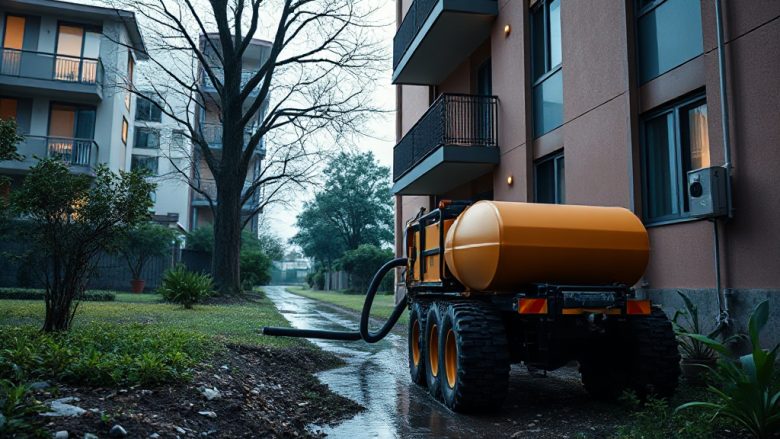
Older Homes, Newer Condos: Drain Problems Across Horto Florestal
Horto Florestal is a neighborhood where building ages collide: post-war houses with mature gardens, mid-century apartment blocks with cast-iron stacks, and recent condominiums with PVC networks and shared garages. That patchwork is why the same blocked drain can behave very differently from one street to the next. If you are searching for a desentupidora Horto Florestal, the first useful question is not just “what is clogged?” but “what kind of building is it clogged in?”
This article looks at three building types that dominate the area, the plumbing problems each one tends to produce, and the service that usually fits. The aim is neighborhood-specific context, so you can describe your situation clearly when you call.
Older Houses: Tree Roots, Clay Pipes and Slow Sinks
The detached houses in Horto Florestal often date from the 1950s to 1970s. Their original clay or concrete sewer lines have had decades to settle, crack and attract roots from mature trees in front gardens. A house like this rarely fails suddenly; it drains a little slower each season, then backs up after heavy rain.
Typical problems in older houses
- Root intrusion at pipe joints, which catches paper and grease and creates repeat blockages in the same spot.
- Bellied or offset pipes where the ground has moved, leaving a low point that holds water and solids.
- Kitchen grease combined with garden soil washing into old gully traps, forming a hard plug downstream.
For these homes, a rodding job may clear the symptom, but hydro-jetting is usually the better fit because it scours the pipe wall and cuts back soft root growth. A camera inspection after clearing tells you whether the line is cracked and likely to block again. When residents book a desentupidora Horto Florestal São Paulo SP, it helps to mention the age of the house and whether the blockage is at a floor drain, a toilet or the main inspection chamber.
Mid-Century Apartments: Shared Stacks and Repeat Offenders
The apartment blocks built between the 1960s and 1980s concentrate many households onto a few vertical stacks. Cast-iron or galvanized waste pipes may now be corroded inside, so waste snags on rough surfaces. In these buildings, one unit’s clog quickly becomes the whole stack’s problem.
What goes wrong in shared stacks
Grease and hair build up on the pipe wall until the effective diameter shrinks. A single flush then seals the remaining gap, and wastewater rises into the lowest unit or the basement gully. Because the cause is shared, clearing one fixture is rarely enough.
The service that fits here is a coordinated approach: jet the vertical stack from an access point, clear the branch serving the affected unit, and check the building’s main drain. Property managers should keep a simple log of which stack blocks and how often. A stack that needs clearing twice in a season is telling you the pipe itself needs inspection, not another quick rodding.
For a building like this, an desentupidora em Horto Florestal São Paulo SP can attend at night or early morning to avoid peak water use, when a half-cleared stack is most likely to overflow again.
Newer Condominiums: Modern Pipes, Different Failure Points
The newest condominiums in the area use smooth PVC networks, which resist root intrusion and scale. Their weak points are elsewhere: long horizontal runs with too little fall, grease from shared kitchens, and construction debris left in lines after handover.
Where new buildings block
- Low-slope horizontal runs where solids settle and water moves too slowly to carry them away.
- Food waste and oil from communal areas, which cool and set inside pipes before reaching the main.
- Debris from renovation work, such as tile grout and sand, that narrows a line long before it fully blocks.
Because the pipes are smooth, hydro-jetting is highly effective and low-risk in these buildings. The bigger issue is prevention: grease traps on shared kitchen lines, strainers on floor drains, and a rule that renovation contractors flush nothing into the sewer. A building that books a preventive jet every year typically avoids the emergency call entirely.
Booking is also different. Newer condos usually have a managing agent, a service entrance and a requirement for proof of insurance from contractors. Having those details ready shortens the response time considerably.
How Building Age Shapes the Booking and the Cost
The practical consequence of this mix is that no single service fits every call. A 1960s house with a root-blocked clay line needs jetting plus a camera check; a 1970s apartment stack needs a coordinated stack clear; a 2010s condo may only need a grease line jetted and a trap installed.
Costs vary with access, time of day and whether the blockage is in a private branch or a shared main. Emergency night calls carry a premium, while planned preventive work is cheaper per visit. The common mistake in all three building types is treating a repeat blockage as bad luck rather than a symptom. If the same drain blocks twice within a year, ask for an inspection rather than another clearance.
Describing your building accurately — its age, pipe material if known, and whether neighbors are affected — is the single most useful thing you can do before the team arrives. In a neighborhood as varied as Horto Florestal, that context turns a generic call-out into the right repair.